LiveUp- Video Chat
- 4.2
- Rating
- 5.00M
- Installs
- Free
- Price

 Analysis by App-foxy
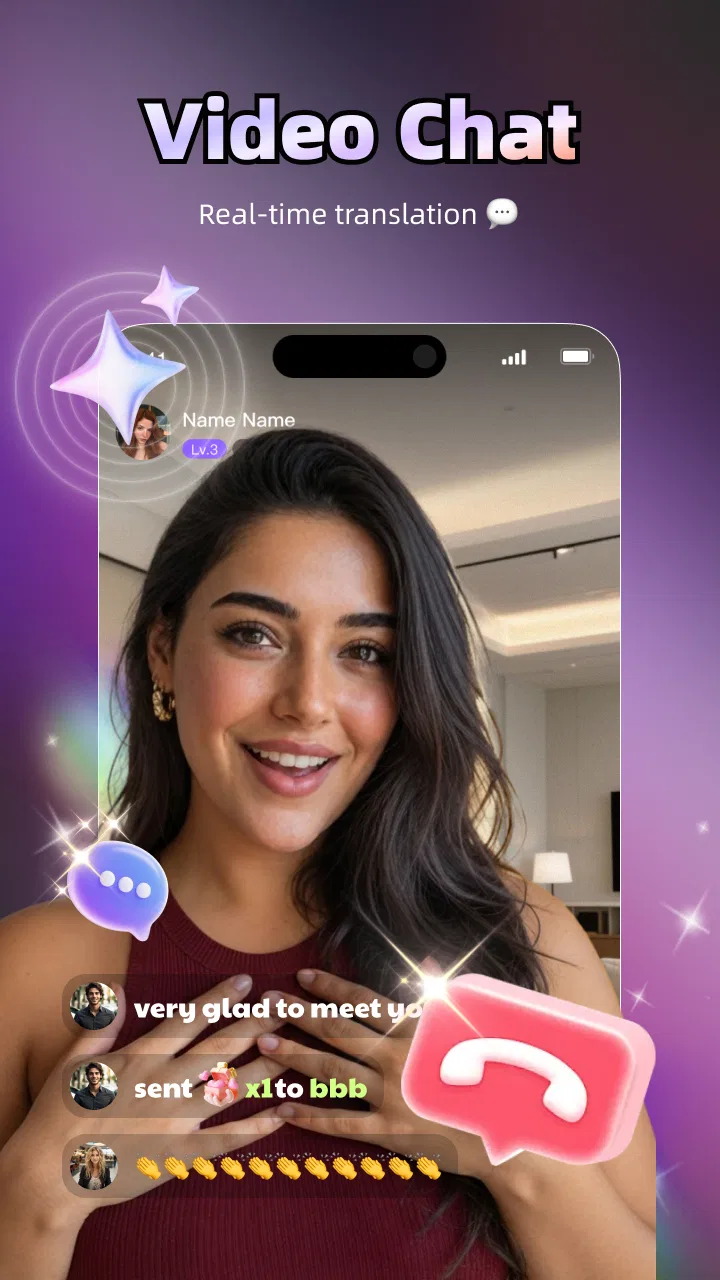
I approached LiveUp- Video Chat as a lifestyle app for people who want to meet more interesting people through live video rather than relying only on text profiles or carefully edited photos. Its basic promise is easy to understand: open a more immediate conversation, see who is on the other side, and decide quickly whether the interaction feels natural. That makes it appealing if you find ordinary social apps too slow or impersonal.
My overall impression is mixed in a useful way. The app is free to install and offers a direct route into video-based social discovery, but that format also demands more attention, confidence, and caution than a conventional messaging app. I would recommend trying it to someone who genuinely enjoys spontaneous conversations, not to someone looking for a quiet, private, or highly structured way to meet people.
How LiveUp- Video Chat feels in everyday use
The app comes from Insight-Innov and sits in the lifestyle category rather than presenting itself as a specialist dating, work, or gaming tool. That distinction matters because it leaves room for different kinds of social contact, but it also means you should set your own expectations before starting. I would treat it as a place for casual discovery, not as a guaranteed route to friendship, romance, or meaningful long-term connections.
You May Also Like

 Blood Strike: 2.5 Anniversary
Blood Strike’s Loadouts Turn Every Drop Into a Tactical Gamble
A close look at Blood Strike’s custom loadouts: how fast access to signature weapons reshapes its battle royale rhythm, rewards preparation, and narrows the gap between fights.

 Pandora - Music & Podcasts
Pandora’s Music Is Easy to Start, but Harder to Recover
Pandora’s strength is its low-effort path from a seed to a station. Its weak spot is how much confidence it asks you to place in connection, setup, and quiet recovery.

 8 Ball Pool
 Is Built on Rivalries, Rematches, and Routine
A close look at the rivalries, rematches, shared routines, and unanswered safety questions that turn a quick pool match into a persistent mobile community.

 Samsung Music
’s Quiet Strength Is Playing What You Already Own
Its reach comes less from spectacle than from dependable access to a personal library. That simplicity is both the app’s strongest retention engine and its ceiling.

 AccuWeather: Weather Radar
AccuWeather Review: A Quick, Clear Forecast for Everyday Decisions
For everyday plans, the best forecast is the one you can understand quickly. AccuWeather makes rain timing, radar, and local conditions easy to act on, with a few trade-offs.

 Hill Climb Racing
Why Hill Climb Racing Still Turns Crashes Into One More Run
A tiny car, a bumpy hill and one more upgrade: Hill Climb Racing keeps resurfacing because its simple chaos makes every near-miss feel personal.
More From Our News Desk



The live-video focus changes the rhythm of using it. With text-first services, I can think about a reply, check a profile, or leave a conversation open until I have time. A video chat asks for a decision in the moment. That immediacy can make a good exchange feel more genuine, yet it can also make an awkward interaction harder to manage. If you are comfortable ending a conversation politely and moving on, the format becomes much easier to enjoy.
The store summary describes the goal as finding more interesting people, while the short description identifies it as live video chat. In practice, those two ideas belong together: the app’s value is less about collecting a large list of contacts and more about testing whether a real-time interaction has potential. I found that useful when I wanted a faster sense of someone’s personality than text alone usually provides.
It is also worth understanding what this app is not. I would not choose it as my main tool for planned group coordination, professional networking, or keeping in touch with people I already know. A messaging platform is usually better for those jobs because it gives conversations more continuity. LiveUp- Video Chat makes more sense when the point is meeting someone new and seeing where an unplanned exchange goes.
Cost, access, and the question of value
The app is free, which lowers the barrier to trying it. That is important here because video-based social discovery is highly personal: some people enjoy the immediacy, while others quickly decide that live conversations are too demanding. Free access lets you judge that fit before committing money, and I see that as one of the strongest practical reasons to test it.
There are in-app purchases ranging from twenty cents to two hundred forty-nine dollars and ninety-nine cents per item. That is a very broad range, so I would not assume that every useful part of the experience is included at no cost, nor would I assume that paying automatically produces better conversations. Before buying anything, I would check exactly what the item does, whether it is consumable or lasting, and whether it solves a problem I have actually encountered.
This is where the app’s value needs a little discipline. Free access has clear value if you only want to browse the experience and occasionally start conversations. Paid value becomes harder to judge without knowing how often you will use any optional purchase and whether the benefit changes the quality of interaction or simply adds convenience. My advice is to use the free experience long enough to decide whether the core format suits you, then set a firm spending limit if you choose to explore purchases.
The age rating is Mature 17+, which is a meaningful part of the cost-and-value decision even though it is not a monetary charge. I would not install it for a younger teenager, and parents should not treat the rating as a substitute for supervision or conversation about live online contact. A video environment can expose users to behavior they did not expect, so maturity includes knowing when to leave a chat and when not to share personal details.
What the app delivers beyond ordinary messaging
The clearest benefit is speed. A video exchange can reveal conversational energy, humor, hesitation, and comfort level much sooner than a long text thread. That does not make video more truthful in every situation, but it does make it a different kind of filter. If I am trying to decide whether I want to continue talking with someone, a brief live interaction can answer that question faster than several days of messages.
There is also a useful reduction in profile overthinking. On many social platforms, users spend too much time polishing photos, rewriting descriptions, and interpreting tiny signals. A live chat shifts attention toward the actual conversation. For someone tired of endless swiping or repetitive introductions, that can feel refreshing. The trade-off is that the app asks me to be present instead of letting me carefully manage every impression.
A realistic scenario would be using it after work when I have twenty minutes free and want a social break without making a formal plan. I could enter with a simple goal: have one or two respectful conversations, avoid treating every chat as a commitment, and leave when my attention drops. That approach is healthier than opening the app with the expectation that every interaction must become a friendship or relationship.
Another practical use is testing conversational compatibility early. Suppose I have matched with someone elsewhere and the text conversation feels promising but vague. A short video exchange can show whether we actually communicate well. I would still avoid moving sensitive conversations or personal information too quickly, but the live format can help me avoid investing excessive time in a connection that does not feel comfortable in real time.
The app has also reached a substantial audience, with over five million installs, and its average rating is 4.2 from around seven thousand nine hundred ratings. Those figures suggest that many people are willing to try this style of social app, but they should not be read as a promise that every user will have the same experience. A large audience can improve the chance of finding someone compatible, while also making the quality and tone of individual interactions less predictable.
Small habits that make the experience better
My first recommendation is to decide your boundaries before opening a chat. Choose what you are comfortable discussing, what information stays private, and what behavior ends the conversation immediately. This is more useful than trying to invent rules while a live interaction is already uncomfortable. Keep identifying details general until trust has developed outside the pressure of the moment.
Second, use short conversations as a screening tool rather than a test you must pass. You do not owe every person a long exchange. If the conversation feels forced, disrespectful, or simply uninteresting, leaving is a reasonable use of the app. This mindset protects the main advantage of live video—quick judgment—without turning it into a performance.
Third, separate curiosity from commitment. A pleasant chat is only evidence that one conversation went well. I would not immediately move to another service, share private contact information, or spend money because someone seemed engaging. The free entry point makes it possible to slow down and see whether the app itself remains useful over several sessions.
Finally, use the app when you can give it attention. Joining a live conversation while commuting, working, or surrounded by distractions makes it harder to judge the interaction and easier to miss warning signs. A quiet setting also helps you decide whether video chat genuinely suits you, rather than confusing a poor environment with a poor app experience.
Where the trade-offs become noticeable
The biggest limitation is the same feature that makes the app distinctive: live video requires immediate participation. People who prefer composing thoughtful messages may find the experience tiring. It can also be uncomfortable for users who are shy, camera-conscious, or simply not in the mood to be seen. For those users, a text-first alternative may provide better control and a more sustainable pace.
Video also creates a stronger demand for personal judgment. A polished appearance or confident voice can influence first impressions, even when those signals say little about compatibility. I try to remember that quick chemistry is not the same as reliability. The format is useful for deciding whether I want another conversation, but it is a weak basis for making larger assumptions about someone.
There is a practical attention cost as well. A text app can fit into small gaps during the day, while a live exchange feels more like an appointment even when it is spontaneous. If you only have a few seconds between tasks, this is probably not the right kind of social tool. It works better when you can be mentally available and accept that some conversations will go nowhere.
Purchases introduce another point of friction. The available item range stretches from small optional spending to a much higher maximum, so I would be especially careful not to buy impulsively during an exciting conversation. The free version is the right starting point for nearly everyone. Paying should be a deliberate choice based on repeated personal use, not on pressure to keep a particular interaction alive.
The app was released on September 12, 2024, and the current version is 4.3.6. It supports Android 7.0 and later, which makes it accessible to people using older Android devices. That broad compatibility is convenient, although video chat still depends on the phone being capable of handling the experience comfortably. I would check how smoothly it runs on my own device before deciding whether it deserves regular use.
Who is likely to get the most from it?
I think the best fit is an adult who enjoys meeting strangers, can handle brief awkward moments, and wants a quicker alternative to long text exchanges. It is particularly suitable for someone who views conversations as experiments rather than commitments. You may appreciate it if the main question is, “Do we communicate naturally?” rather than, “Can I build a complete profile before speaking?”
It can also suit people who have become frustrated with endless browsing on conventional social platforms. Instead of spending a long session evaluating static profiles, you can focus on direct interaction. That does not remove the need for judgment, but it changes where the effort goes. You spend less time optimizing a profile and more time deciding whether an actual conversation is worth continuing.
I would skip it if you want detailed matching controls, a strongly organized community, or a dependable archive of conversations. I would also choose a different option if privacy and low-pressure communication are your top priorities. Text messaging, moderated interest groups, or established services with clearer relationship-focused tools may be better for those needs.
People under the Mature 17+ age rating should not be using it. Adults who are new to live social apps should start slowly, avoid sharing sensitive information, and regard discomfort as a valid reason to stop. The app can help create a first connection, but it cannot replace common sense, patience, or independent verification when an online contact begins asking for trust.
My final recommendation
I see LiveUp- Video Chat as a worthwhile free experiment for adults who want direct, spontaneous social discovery. Its strongest quality is the ability to move quickly from curiosity to a real conversation. That can cut through the slow pace of text-based interaction and make it easier to recognize genuine conversational chemistry.
Its weaknesses are equally clear: live video is demanding, first impressions can be misleading, and optional purchases require careful restraint. I would use the free access first, keep conversations brief until trust develops, and spend money only after confirming that the app has become a regular part of my social routine. The broad purchase range makes that caution especially important.
In the end, I recommend trying it if you are comfortable being present on camera and want to meet people without waiting through long message exchanges. I would skip it if you need a highly private, carefully paced, or purpose-specific social environment. For the right user, the real value is not guaranteed attention or instant connection, but a faster way to discover whether a conversation feels worth having.
FAQs for LiveUp- Video Chat
01What is LiveUp- Video Chat and what can I do with it?
LiveUp- Video Chat is a social communication app focused on real-time video conversations. After creating a profile, users can browse available people, start video chats, send messages, and discover new contacts through the platform. The experience is designed for casual conversations and meeting people online, although the features and available users may vary depending on your location, age, account status, and the current version of the app.
02Is LiveUp- Video Chat free to download and use?
The app may be free to download, but some features can require in-app purchases, virtual credits, subscriptions, or other paid options. Video interactions, premium matching tools, gifts, or profile visibility enhancements may not all be included in the basic experience. Before spending money, review the pricing information shown inside the app and check whether subscriptions renew automatically through Google Play or the Apple App Store.
03Is LiveUp- Video Chat safe for meeting and talking with strangers?
LiveUp- Video Chat includes a social environment where you may interact with people you do not know, so users should remain careful. Avoid sharing your home address, passwords, financial information, private documents, or precise daily routines. Use the app’s block and report tools when available, keep conversations inside the platform, and remember that profiles and identities cannot always be independently verified.
04What permissions and account information does LiveUp- Video Chat require?
A video chat service commonly requests access to the camera and microphone so you can participate in live conversations. It may also request notifications, storage, contacts, or other permissions depending on the device and enabled features. Read the permission prompts before accepting them, provide only access that is necessary, and review the app’s privacy policy to understand how profile, usage, device, and communication data may be handled.
05What should I know about age limits and inappropriate content?
Because LiveUp- Video Chat connects users through live communication, age restrictions and content rules are especially important. Check the official store listing and the app’s terms to confirm whether it is appropriate for you. Live conversations can be unpredictable, and inappropriate behavior may occur despite moderation. Do not allow children to use the service without appropriate supervision, and report, block, or leave any conversation that violates the rules.
Pros
- Simple interface makes starting video chats quick for new users.
- Supports spontaneous conversations with people from different backgrounds.
- Video interaction feels more personal than text-based social apps.
- Useful for practicing casual communication and meeting new contacts.
- Profile-based discovery can help users find chats matching their interests.
Cons
- Some features may require in-app purchases or premium access.
- Matching quality can vary depending on the number of active users.
- Video calls may consume significant mobile data and battery power.
- Public video chats can expose users to inappropriate or unwanted behavior.
- Users should carefully review privacy settings before sharing personal details.

LiveUp- Video Chat
Gallery